Physical Address
304 North Cardinal St.
Dorchester Center, MA 02124
Physical Address
304 North Cardinal St.
Dorchester Center, MA 02124

Starting a YouTube channel is an exciting adventure, but let’s be real: the difference between a video that hooks viewers and one that gets scrolled past often comes down to your footage quality. As a beginner, you don’t need Hollywood-level gear to create engaging content, but picking one of the best cameras to start with YouTube can make your tutorials, vlogs, or reviews look polished and professional right from day one. In 2025, with over 500 hours of video uploaded to YouTube every minute, standing out means focusing on clear visuals, smooth stabilization, and easy handling.
That’s why choosing the right camera matters so much. It sets the foundation for your channel’s growth, helping you build confidence without constant tech frustrations. In this guide, we’ll dive into the top cameras to start with YouTube, emphasizing key factors like price, specifications, and ease of use. Whether you’re on a tight budget or ready to invest a bit more for future-proof features, we’ll cover options that balance affordability with performance. By the end, you’ll know exactly how to pick a budget camera to start with YouTube that matches your style, so you can focus on what you love: creating content that connects.
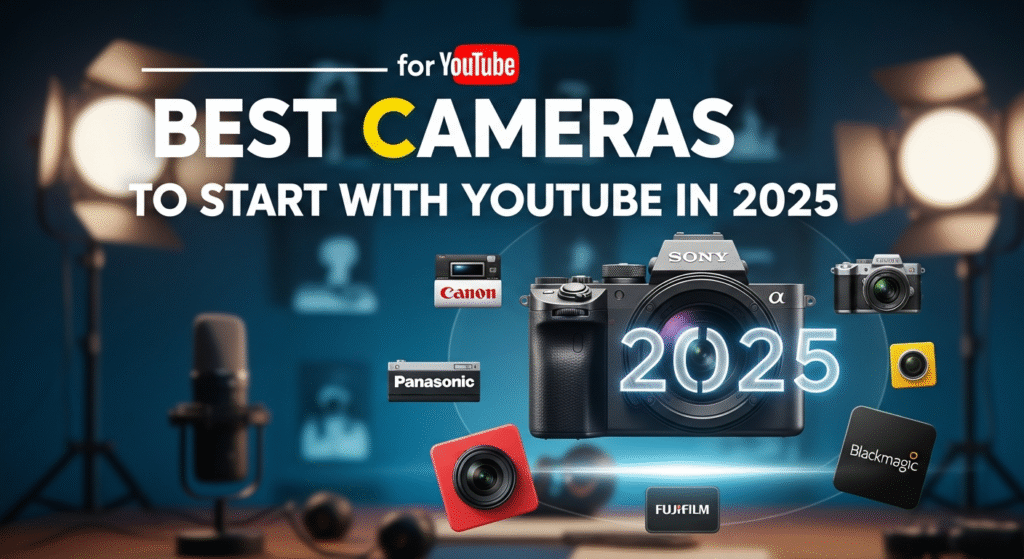
Diving into the world of cameras can feel overwhelming, especially when you’re just launching your channel. But don’t worry—arming yourself with the right knowledge ensures you get a tool that enhances your creativity rather than complicates it. When scouting the best cameras to start with YouTube, prioritize these essentials to avoid buyer’s remorse.
First, consider your price range. As a beginner, aim for budget cameras to start with YouTube under $500 to keep things accessible. Options like compact vloggers or entry-level mirrorless models deliver 4K video without breaking the bank. If you’re planning to grow, stretch to $700–$1,000 for interchangeable lenses that let you upgrade over time.
Next, evaluate features tailored for video creators. Look for 4K resolution at 30fps or higher for sharp, future-proof footage—essential for YouTube’s algorithm favoring high-quality uploads. Autofocus with face/eye detection keeps you in focus during dynamic shots, while a flip-out screen is a must for solo vlogging. Built-in stabilization (like gimbals or IBIS) reduces shaky handheld clips, and microphone inputs allow easy audio upgrades, since poor sound can tank even the best visuals.
Build quality matters for portability and durability. Compact designs, like pocket-sized gimbals or lightweight mirrorless bodies, are ideal for on-the-go creators. Weather-sealing is a bonus if you vlog outdoors, but for indoor setups, focus on ergonomic grips and intuitive buttons.
Performance-wise, check low-light handling via larger sensors (APS-C or 1-inch) for indoor talks or evening shoots. Battery life should hit 1–2 hours of continuous recording, and expandable storage via SD cards keeps you filming without interruptions.
Don’t overlook warranty and brand reliability. Stick to trusted names like Sony, Canon, or DJI—they offer 1–2 year warranties and solid customer support. Read user reviews for real-world reliability, and consider bundles with tripods or mics for extra value.
Finally, think about your content type. Vloggers need portability; tutorial makers prioritize clean 4K. By weighing these—price, specs, ease, and reliability—you’ll land on a high-performance camera to start with YouTube that feels like an extension of your vision. Ready to explore our picks? Let’s jump in.
We’ve curated five standout options from the top cameras to start with YouTube, tested for beginner-friendly features and value. Each shines in video quality, simplicity, and growth potential, making them perfect for new creators.

The Sony ZV-E10 is a game-changer for beginners stepping up from smartphones, offering pro-level video in a compact mirrorless body. It’s designed specifically for content creators, with interchangeable lenses for endless creative possibilities as your channel evolves.
Key Specifications
Pros
Cons
Price Range: $600–$700 (body only); $750 with 16-50mm kit lens
What stands out is its creator-first design—like a “product showcase” mode that blurs backgrounds for reviews. For budget cameras to start with YouTube, this delivers high-performance without complexity, earning raves from new YouTubers for its sharp, colorful footage.

Canon’s EOS M50 Mark II bridges point-and-shoot simplicity with DSLR power, making it a top pick among best cameras to start with YouTube for those who want foolproof operation and stunning results.
Key Specifications
Pros
Cons
Price Range: $500–$600 (with 15-45mm lens)
It stands out for its beginner-friendly Dual Pixel AF, which tracks faces flawlessly during talking-head videos. If you’re eyeing top cameras to start with YouTube under $600, this Canon’s reliability and vibrant output make it a no-brainer for tutorials or unboxings.
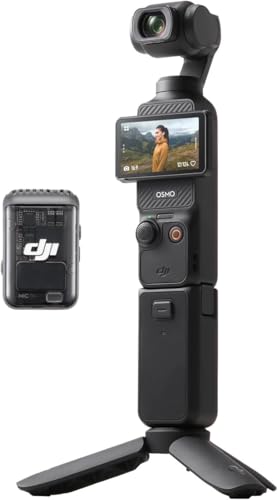
The DJI Osmo Pocket 3 redefines portability, blending a gimbal stabilizer with a capable camera—ideal for spontaneous YouTube starter cameras that fit in your pocket.
Key Specifications
Pros
Cons
Price Range: $500–$550 (standard); $670 with creator combo
What makes it shine? The built-in gimbal delivers pro stabilization without extra gear, perfect for travel creators. Among best cameras to start with YouTube, it’s the ultimate budget high-performance camera for mobile storytelling.

Sony’s ZV-1 II is a refined compact that’s all about effortless vlogging, packing punchy video into a body smaller than your smartphone— a favorite in top cameras to start with YouTube lists.
Key Specifications
Pros
Cons
Price Range: $800–$900
It stands out with vlog-specific tweaks like a tally lamp for recording alerts. For beginners seeking a compact camera to start with YouTube, this delivers sharp, stabilized 4K that’s ready for upload.

The Panasonic Lumix G100 targets creators who prioritize sound, combining solid video with pro audio tools in a lightweight mirrorless frame—one of the best cameras to start with YouTube for podcasters-turned-vloggers.
Key Specifications
Pros
Cons
Price Range: $550–$650 (with 12-32mm lens)
Its audio prowess sets it apart, capturing directional sound without lav mics. A strong budget camera to start with YouTube for reaction videos or chats.
| Camera Model | Sensor Type | Max Video Resolution/FPS | Key Feature | Stabilization Type | Price Range (USD) | Best For Beginners? |
|---|---|---|---|---|---|---|
| Sony ZV-E10 | APS-C | 4K/30p | Eye AF | Digital | $600–$700 | Versatile growth |
| Canon M50 Mark II | APS-C | 4K/24p | Dual Pixel AF | Lens-based | $500–$600 | Easy color grading |
| DJI Osmo Pocket 3 | 1-inch | 4K/120p | 3-axis gimbal | Mechanical | $500–$550 | Portable vlogs |
| Sony ZV-1 II | 1-inch | 4K/30p | Wide lens | Optical | $800–$900 | Quick setups |
| Panasonic G100 | MFT | 4K/30p | Audio beamforming | Lens O.I.S. | $550–$650 | Talk-focused |
This text-based table highlights how these high-performance cameras to start with YouTube stack up, focusing on specs that drive video success.
Picking the right camera boils down to your setup, style, and spend. For budget cameras to start with YouTube under $600, the Canon EOS M50 Mark II is unbeatable—its reliable AF and vibrant 4K suit beginners filming static tutorials or home reviews without fuss.
If portability is key for travel vlogs, grab the DJI Osmo Pocket 3. Its gimbal magic and pocket size make it a top camera to start with YouTube for on-the-move creators who hate bulky rigs.
Performance chasers on a moderate budget? The Sony ZV-E10 shines with APS-C depth and lens flexibility, ideal for those eyeing channel growth into cinematic edits.
For quick, no-nonsense vlogging, the Sony ZV-1 II’s compact power fits prosumer needs, though its price edges toward mid-range.
Audio-first folks, like podcasters branching into video, will love the Panasonic Lumix G100’s mic tech—perfect for interviews without extra gear.
Overall, start with your needs: low budget and ease? Canon. Adventure? DJI. Future-proof? Sony. Test in-store if possible, and remember, great lighting and editing amplify any camera.
Launching your YouTube journey with the right gear sets you up for success, and 2025’s best cameras to start with YouTube prove you don’t need a fortune for fantastic results. From the versatile Sony ZV-E10 to the gimbal-packed DJI Osmo Pocket 3, each pick balances price, power, and simplicity to match beginner dreams.
Our top cameras to start with YouTube—like the budget-friendly Canon M50 Mark II and audio-savvy Panasonic G100—empower you to create sharp 4K vlogs, smooth tutorials, or dynamic stories. Whether chasing high-performance cameras to start with YouTube or sticking to essentials, prioritize what aligns with your content and wallet.
Take a moment to reflect on your style: static setups, wild adventures, or chatty reviews? Your choice will evolve with you, but starting strong builds momentum. Dive in, hit record, and watch your channel thrive—happy creating!