Physical Address
304 North Cardinal St.
Dorchester Center, MA 02124
Physical Address
304 North Cardinal St.
Dorchester Center, MA 02124

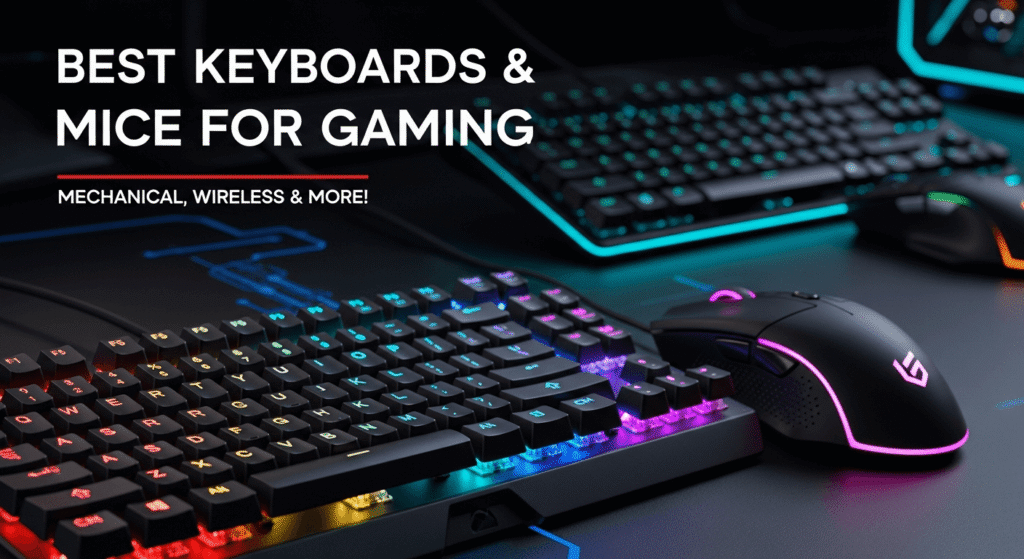
In the fast-paced world of gaming, your keyboard and mouse are more than just input devices—they’re your lifeline to victory. Choosing the best keyboards & mice (mechanical, wireless) for gaming can make the difference between landing that crucial headshot or fumbling a combo in your favorite FPS or MOBA. As we dive into 2025, advancements in mechanical switches, low-latency wireless tech, and customizable RGB lighting have elevated these peripherals to new heights of performance and comfort.
Why does this matter? A clunky setup leads to fatigue during marathon sessions, missed inputs in competitive play, and frustration that pulls you out of the immersion. On the flip side, the right gear boosts precision, responsiveness, and endurance, letting you focus on strategy and skill. We’ll break it down by key factors: price (from budget-friendly under $100 to premium over $200), specifications (like switch types, DPI sensors, and battery life), and ease of use (setup simplicity, software integration, and ergonomics). Whether you’re a casual player dipping into Valorant or a pro grinding League of Legends, this guide will help you find the top keyboards & mice (mechanical, wireless) for gaming that fit your style. Let’s gear up and get clicking.
Picking the best keyboards & mice (mechanical, wireless) for gaming isn’t about grabbing the shiniest box—it’s about matching features to your needs. Start with your budget: entry-level combos start at $50 for wired basics, while high-end wireless setups can hit $300 for pro-grade performance. Aim for value that balances cost with longevity.
Price range is crucial. Budget options under $100 offer solid mechanical keys and optical sensors but skimp on extras like programmable macros. Mid-range ($100–$200) hits the sweet spot with wireless freedom and RGB customization. Premium picks over $200 deliver Hall Effect switches for rapid actuation and 8,000Hz polling rates for near-zero lag.
Features define your experience. For keyboards, prioritize mechanical switches—linear (smooth, like Cherry MX Red) for fast gaming, tactile (bump feedback, like Brown) for versatile play, or clicky (audible snap, like Blue) for satisfaction. Wireless models need strong 2.4GHz connections (Bluetooth as backup) and 50+ hours of battery life. Mice shine with high DPI (12,000+ for precision), low click latency (<1ms), and grip styles (palm for comfort, claw/fingertip for control). Look for hot-swappable switches on keyboards for easy tweaks and side buttons on mice for quick binds.
Build quality ensures durability. Aluminum frames resist flex, PBT keycaps outlast ABS, and braided cables (or none for wireless) prevent wear. Weight matters too—lightweight mice (under 70g) aid flick shots, while heavier ones (80g+) feel stable for tracking.
Performance is non-negotiable. Test polling rates (1,000Hz standard, 4,000Hz+ for esports) and sensor accuracy (optical for flawless tracking). Software like Razer’s Synapse or Logitech’s G Hub should allow macro programming, DPI profiles, and RGB syncing without bloat.
Warranty and brand reliability seal the deal. Reputable brands like Razer, Logitech, Corsair, and SteelSeries offer 2–3 year coverage and solid customer support. Avoid no-names prone to double-clicking or drift. Finally, consider ease of use: plug-and-play setup, multi-device pairing, and ergonomic designs reduce strain. Factor in your desk space—TKL (tenkeyless) keyboards free up room for mouse sweeps. By weighing these, you’ll land on the high-performance keyboards & mice (mechanical, wireless) for gaming that elevate your setup without regrets.
We’ve curated five standout options blending keyboards and mice into cohesive setups. These are drawn from 2025’s top performers, focusing on mechanical excellence and wireless prowess. Each combo is vetted for synergy, like matching software ecosystems for seamless RGB control.


Short overview: This powerhouse duo from Razer delivers esports-level precision with Razer’s signature flair. The BlackWidow V4 Pro is a full-size mechanical beast with hot-swappable switches, while the DeathAdder V3 Pro is an ergonomic wireless mouse that’s a staple for pros.
Key specifications:
Pros and cons: Pros: Lightning-fast actuation (0.1–4.0mm adjustable), intuitive Synapse software for macros and profiles, exceptional build resists spills. The mouse’s shape molds to palms for hours of comfort. Cons: Premium price tag, keyboard’s full-size layout crowds small desks, mouse lacks Bluetooth for non-gaming use.
Price range: $250–$300 (combo bundle often discounted).
Why it stands out: In a sea of copycats, this combo’s ecosystem integration—syncing lights and saving game-specific profiles—makes it the top keyboards & mice (mechanical, wireless) for gaming for competitive players. It’s built for speed demons who demand zero compromises.
Short overview: Logitech’s modular, pro-endorsed setup targets versatility. The detachable magnetic wrist rest on the G Pro X TKL pairs perfectly with the featherlight Superlight 2, ideal for FPS enthusiasts.
Key specifications:
Pros and cons: Pros: Hot-swappable for switch swaps, compact TKL frees mouse space, mouse’s symmetry suits left/right hands. Battery life crushes rivals. Cons: No dedicated media keys, software can feel overwhelming for beginners, mouse clicks are crisp but lack haptic feedback variety.
Price range: $200–$250.
Why it stands out: Endorsed by teams like Cloud9, this is the budget keyboards & mice (mechanical, wireless) for gaming that punches above its weight—light, reliable, and upgradeable for long-term value.
Short overview: Corsair’s compact wireless ecosystem shines for multi-device gamers. The 60% K70 Mini packs punch in a small frame, complemented by the versatile Dark Core mouse with Qi charging.
Key specifications:
Pros and cons: Pros: True wireless freedom across three devices, iCUE software for deep customization, mouse’s Qi pad enables desk charging. Compact for travel. Cons: Tiny keyboard challenges touch-typists, heavier mouse suits palm grips only, battery dips with full RGB.
Price range: $180–$220.
Why it stands out: For hybrid work-gamers, this combo’s cross-platform syncing makes it a high-performance keyboards & mice (mechanical, wireless) for gaming—seamless between PC, console, and mobile.
Short overview: SteelSeries brings OLED smarts and ultralight agility. The Apex Pro TKL’s HyperMagnetic switches adjust per key, while the Aerox 3’s honeycomb shell keeps things breezy.
Key specifications:
Pros and cons: Pros: Rapid Trigger for spam-heavy games, GG software ecosystem unites controls, mouse’s vents prevent sweat buildup. Insane battery. Cons: Keyboard software bugs persist in updates, mouse side buttons feel mushy, premium switches wear faster under abuse.
Price range: $220–$270.
Why it stands out: The adjustable actuation redefines responsiveness, positioning this as the best keyboards & mice (mechanical, wireless) for gaming for titles like Counter-Strike where every millisecond counts.
Short overview: A cross-brand mashup for enthusiasts: Keychron’s customizable QMK/VIA mechanical board meets Razer’s esports mouse king. Wireless keyboard bliss with a wired option.
Key specifications:
Pros and cons: Pros: Open-source firmware for endless mods, aluminum case thocks satisfyingly, mouse’s shape is universally loved. Dual wireless longevity. Cons: Assembly required for full customization, no unified software, mouse dongle competes for USB ports.
Price range: $190–$240.
Why it stands out: Tinkerers rejoice—this mod-friendly pair offers the top keyboards & mice (mechanical, wireless) for gaming with unmatched personalization at a fair price.
Here’s a quick text-based showdown of our top picks. Prices are approximate 2025 averages.
| Combo | Layout/Switches | DPI/Battery (Mouse) | Wireless? | Key Features | Price Range |
|---|---|---|---|---|---|
| Razer BlackWidow V4 Pro + DeathAdder V3 Pro | Full / Razer Green | 30K / 90 hrs | Mouse only | Hot-swap, Synapse macros | $250–$300 |
| Logitech G Pro X TKL + Superlight 2 | TKL / GX Red | 32K / 95 hrs | Mouse only | Modular, LIGHTSPEED | $200–$250 |
| Corsair K70 Mini + Dark Core | 60% / Cherry MX Speed | 18K / 50 hrs | Both | Qi charging, multi-device | $180–$220 |
| SteelSeries Apex Pro TKL + Aerox 3 | TKL / OmniPoint 2.0 | 18K / 200 hrs | Mouse only | OLED screen, Rapid Trigger | $220–$270 |
| Keychron Q5 Max + Viper V3 Pro | 96% / Gateron Jupiter | 35K / 95 hrs | Both | QMK/VIA, gasket mount | $190–$240 |
This table highlights how each excels: Razer for power users, Corsair for portability.
Navigating the best keyboards & mice (mechanical, wireless) for gaming depends on your setup and playstyle. For budget gamers under $200, the Corsair K70 Mini + Dark Core combo is a no-brainer—affordable wireless without skimping on essentials, perfect for casual Fortnite nights.
Beginners should eye the Logitech G Pro X TKL + Superlight 2. Its straightforward software and ambidextrous design ease the transition from membrane gear, building confidence in Apex Legends raids.
Performance chasers in esports? The SteelSeries Apex Pro TKL + Aerox 3 delivers with magnetic switches and featherweight tracking—ideal for Valorant pros needing split-second resets.
Professionals or streamers grinding long hours will love the Razer BlackWidow V4 Pro + DeathAdder V3 Pro. Ergonomic bliss and macro depth handle everything from Overwatch streams to content creation.
Hybrid users (gaming + productivity) grab the Keychron Q5 Max + Viper V3 Pro. Custom firmware and multi-OS support make it versatile for workdays bleeding into Dota 2 queues.
Consider your grip: palm favors heavier ergonomic mice like DeathAdder; claw thrives on light Vipers. Desk warriors, go TKL or smaller. Test in-store if possible—your hands will thank you.
Wrapping up, the best keyboards & mice (mechanical, wireless) for gaming in 2025 blend innovation with reliability, from Razer’s ecosystem dominance to Keychron’s modder appeal. Standouts like the Razer combo for pros, Logitech for value, and Corsair for freedom cover every angle.
Ultimately, prioritize what fits your budget, games, and grip—don’t chase hype over comfort. Whether upgrading for competitive edge or dipping toes into mechanical bliss, these picks ensure responsive, fatigue-free sessions. Dive in, tweak to perfection, and level up your game. Your next clutch win awaits.